

In today's world, social media management isn't just about posting and creating content. Over 5.66 billion social media "user identities" exist globally (Oct 2025) – meaning more than two-thirds of people use social media. Most people know that social media can make their business profitable, but unfortunately, they don't know how. The good news is, it's not as complicated as it seems. It just requires a shift in perspective—from random posting to strategic storytelling.
To succeed in 2026, you need a complete strategy. So, let's dive in and explore this new trend that can help even small businesses grow massive.
What Is Social Media Management? (And Why Your Business Needs It)
You probably already have a guess. Social media management is, well, managing your social media, right? Posting here, replying there. But the truth is, what you see on your screen is just the tip of the iceberg.
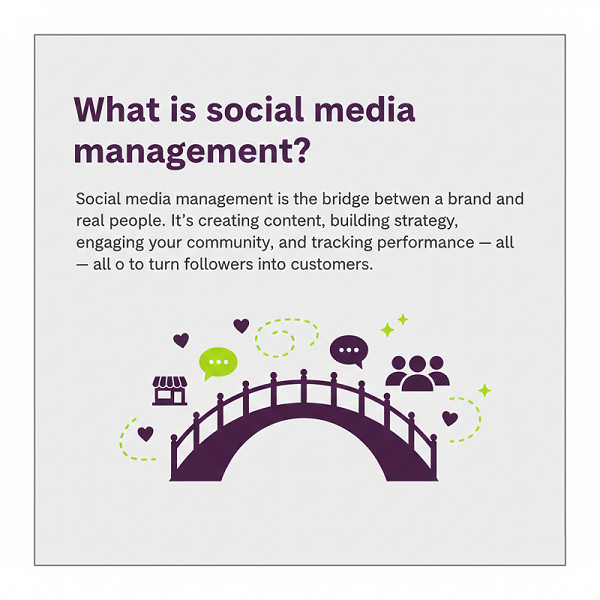
Every brand has its own unique personality. So, when we take over a brand's social media, what are we really doing?
We're building a bridge between that brand and real people.
Why?
Because people don't just buy products—they buy with their feelings. And social media? It's actually the perfect place to build that emotional connection.
Social media management is the ongoing process of creating, scheduling, analyzing, and optimizing content across platforms to grow and nurture an audience. It combines strategy, creativity, analytics, and community building into one structured system.
Why Social Media Management Matters for Modern Businesses
A strong social media presence builds brand awareness, trust, and customer loyalty. It enables direct engagement and timely customer service, turning followers into customers.
Statista reports that social users are highly engaged: users spend around 2.5 hours per day on social platforms, and 90% of consumers follow brands on social media. Most customers say they're more likely to buy from brands they feel connected to online.
You see the pattern? Social media works when people feel something.
But if you're running a business, you probably want to know what else you're getting out of it. Fair enough. Here are the key benefits.
Key Benefits That Drive Real Results
From our experience, effective social media management doesn't just keep branding alive. It creates momentum.
When done strategically, social media becomes a growth engine — not just a content machine.
Here's what that actually looks like in business terms:
- Stronger Brand Awareness — Consistent posting using the right social media strategy keeps your brand visible. The more consistently people see you, the more familiar you become — and familiarity builds trust.
- Higher Engagement = Warmer Leads — When you actively invest in social media community management, you're not just replying to comments — you're building relationships. And relationships convert faster than cold traffic ever will.
- Increased Website Traffic — Strategic content funnels people from platforms like Instagram, LinkedIn, and TikTok directly to your landing pages. With proper social media management tools, every click is measurable.
- Direct Revenue Growth — For example, one of our real estate clients sold 23 properties within two months of structured social media management. The difference wasn't "more posts." It was:
- Clear positioning
- Consistent messaging
- Trust-building content
- Strong call-to-actions
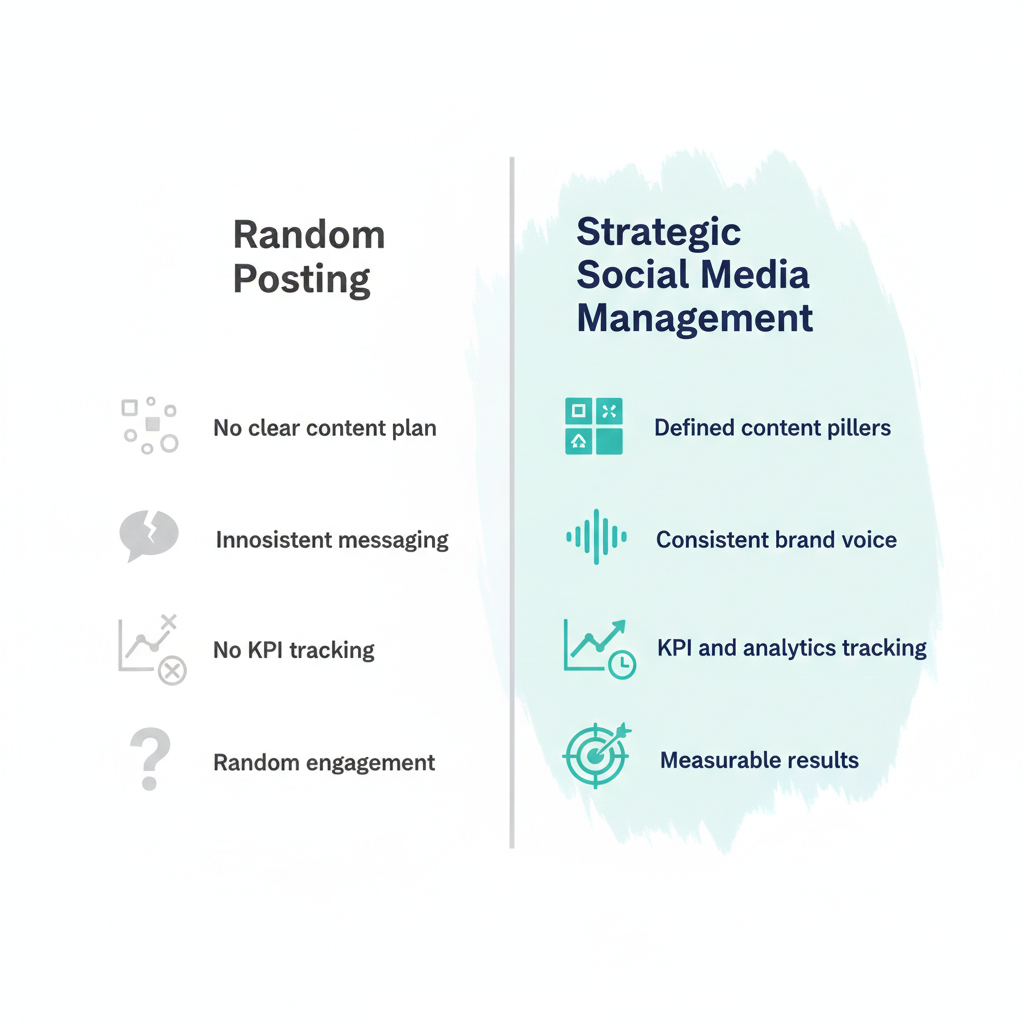
That's the difference between random posting and professional social media marketing and management.
Business Impact — From Brand Awareness to Revenue
Let's connect the dots clearly.
Users spend hours per day on social platforms. Over 90% of consumers follow brands. That means your audience is already there — the question is whether your brand shows up intentionally.
Professional social media management services turn attention into assets:
| Social Activity | Business Impact |
|---|---|
| Consistent content | Brand authority |
| Community replies | Customer loyalty |
| Educational posts | Trust building |
| Paid campaigns | Lead generation |
| Analytics tracking | ROI clarity |
Modern social media management business models treat content like an investment — not an expense.
If you can track it, you can scale it.
Core Components of Social Media Management Services
Many business owners think social media management is just scheduling posts.
It's not.
Professional social media management services combine strategy, execution, analysis, and optimization.
Content Strategy & Editorial Calendar
Every successful social media management agency starts here.
Before posting anything, we answer:
- Who is your audience?
- What problems do they have?
- What emotions drive their decisions?
- What action do we want them to take?
Then we build content pillars.
Example structure:
- 40% authority/educational
- 30% trust-building & brand story
- 20% engagement content
- 10% direct offers
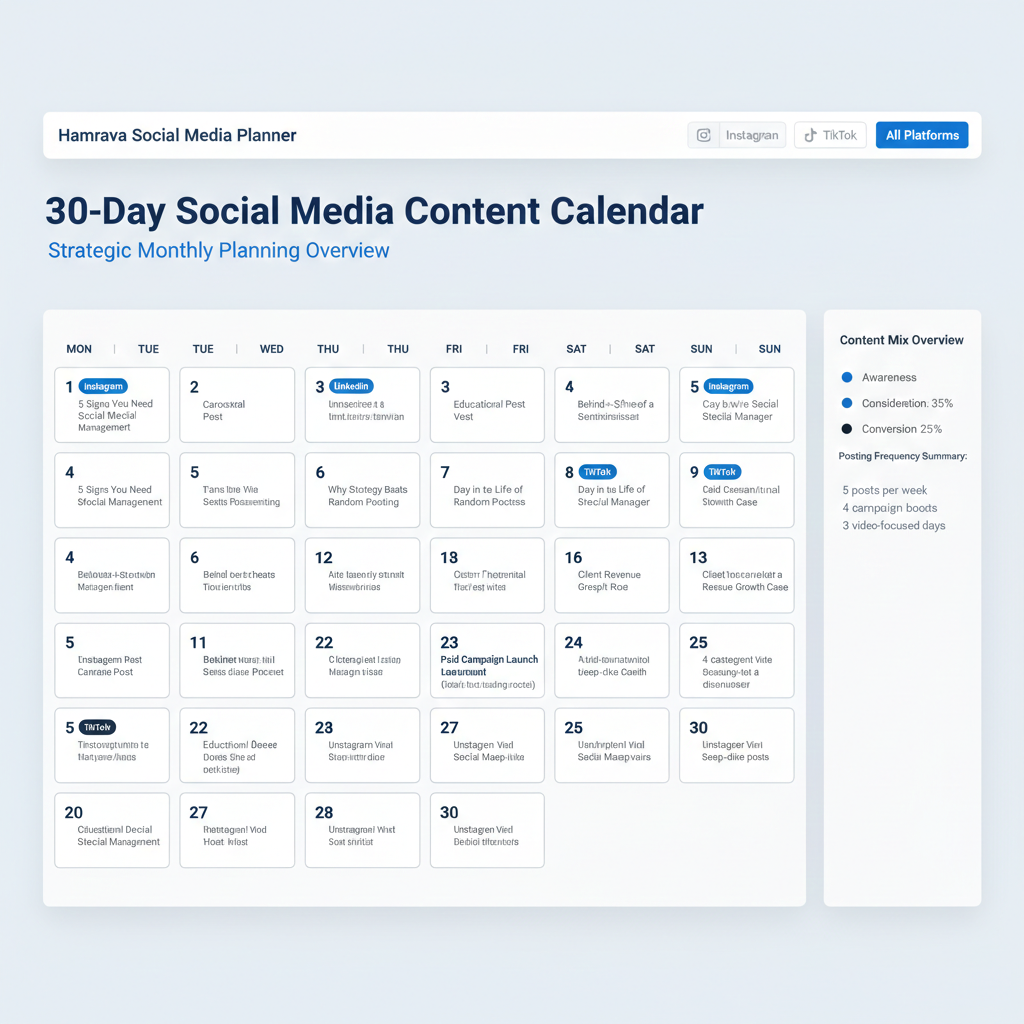
We use professional social media management platforms to plan monthly calendars in advance, ensuring:
- Consistency
- Brand alignment
- Funnel structure
- Campaign integration
Community Engagement & Customer Care
Posting without engagement is like speaking into a microphone in an empty room.
Strong social media account management services include:
- Comment moderation
- DM management
- Review monitoring
- Response-time optimization
Fast replies increase trust. Trust increases sales.
This is also where social media reputation management becomes critical. One unanswered complaint can cost more than an ad campaign.
Social Media Reputation Management
Your brand's reputation now lives online.
Professional social media brand management includes:
- Monitoring brand mentions
- Handling negative feedback strategically
- Crisis management planning
- Sentiment analysis
Reputation isn't built in one viral post. It's built in daily consistency.
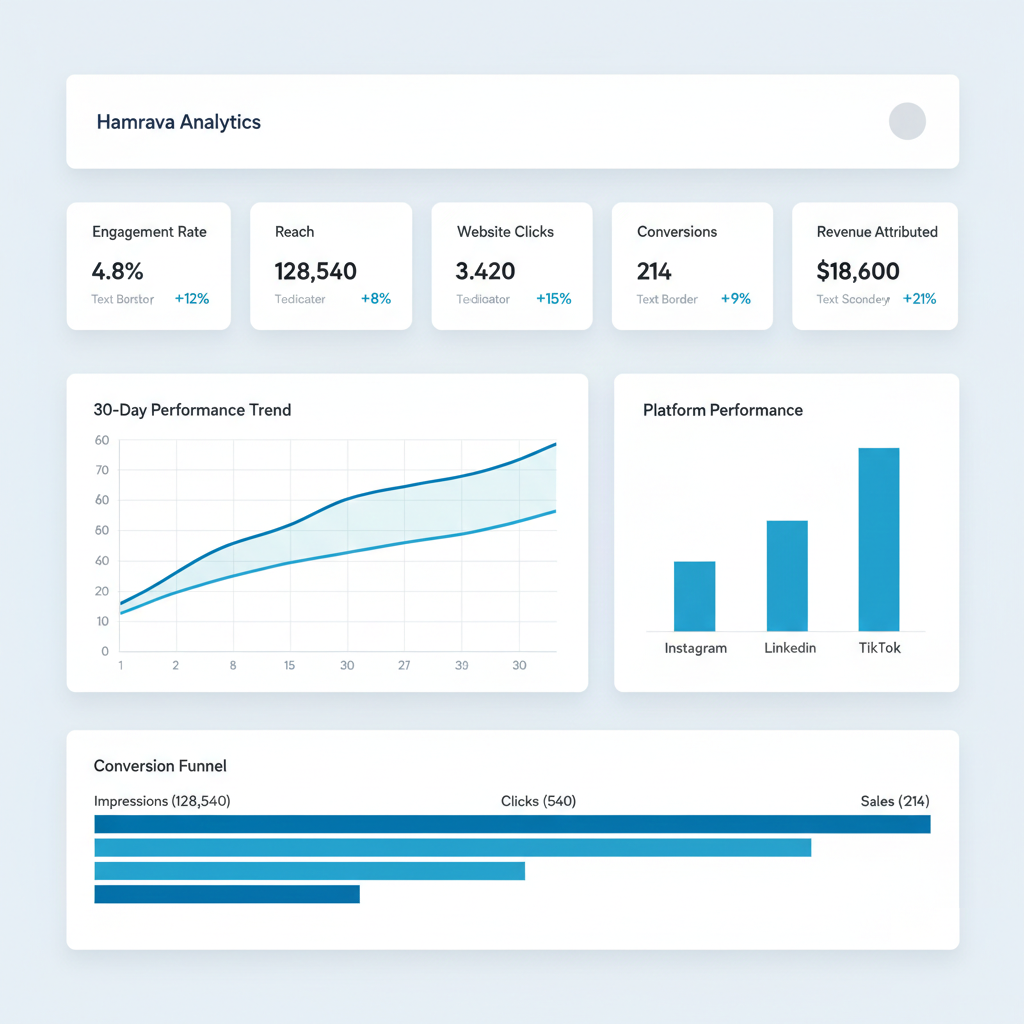
Analytics, Reporting & ROI Tracking
If you're not measuring it, you're guessing.
Professional tools allow tracking of:
- Engagement rate
- Reach & impressions
- Follower growth
- Click-through rate
- Conversion rate
- Revenue attribution
With proper social media project management, social metrics connect directly to business KPIs.
That's how you justify social media management pricing — with data.
The Role of a Social Media Manager: Strategy, Skills & Execution
Behind every successful social media management strategy, there's a skilled social media manager making hundreds of small decisions every week.
Many people assume a social media manager just "posts content." In reality, this role sits at the intersection of marketing, psychology, data analysis, branding, and customer service.
A professional social media manager is responsible for turning business objectives into daily digital actions.
What Does a Social Media Manager Actually Do?
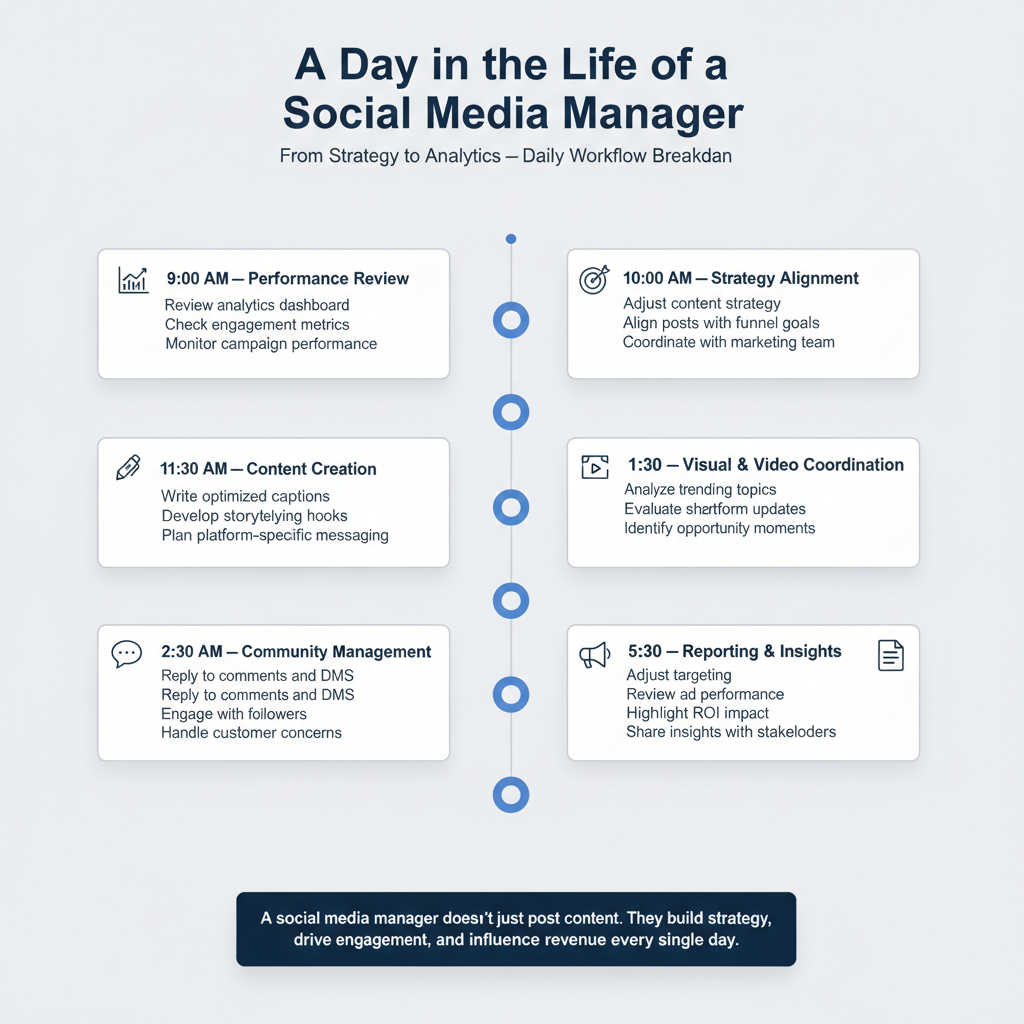
Core social media manager tasks typically include:
- Developing a social media management strategy aligned with business goals
- Planning and maintaining the content calendar
- Writing captions optimized for engagement and discovery
- Designing or coordinating visuals and short-form videos
- Managing comments, DMs, and community interactions
- Monitoring trends and platform updates
- Running paid social media management campaigns
- Tracking analytics and reporting ROI to stakeholders
In many companies, the social media manager also collaborates with sales teams, designers, paid ads specialists, and leadership. It's one of the most cross-functional roles in modern marketing.
Essential Skills for Modern Social Media Managers
To deliver effective social media management in 2026, the skillset goes far beyond creativity.
A strong social media management professional needs:
- Strategic Thinking — Understanding funnels, buyer psychology, and positioning — not just aesthetics.
- Data & Analytics Literacy — Reading dashboards, interpreting engagement metrics, and adjusting strategy based on performance.
- Cultural Awareness — Knowing when to jump on a trend — and when to stay silent.
- Content Creation & Storytelling — Turning brand messages into relatable narratives that feel human, not promotional.
- Technical Tool Proficiency — Using social media management tools and platforms efficiently to streamline workflows.
Why This Role Impacts Revenue
Here's what most businesses underestimate:
A skilled social media manager directly influences revenue by:
- Improving conversion-driven content
- Increasing audience trust
- Shortening the customer journey
- Turning followers into qualified leads
That's why many growing brands choose either to hire a dedicated social media management consultant or partner with a social media management agency instead of assigning the task internally without expertise.
Tools & Software for Social Media Management
Social media tools handle many of the repetitive day-to-day tasks that come with managing accounts. That means less time on manual work — and more time thinking about ideas, strategy, and what actually moves the brand forward.
Top Platforms for Social Media Management
Some of the most widely used social media management platforms include:
- Hootsuite
- Sprout Social
- Buffer
- Meta Business Suite
- Later
These social media management sites allow businesses to:
- Schedule posts across multiple platforms
- Monitor engagement in one dashboard
- Track performance metrics
- Collaborate with team members
Agencies like Hamrava and other professional social media management companies use structured tool stacks to ensure consistency, reporting clarity, and workflow efficiency.
Choosing the Right Tool for Your Team
Not every tool fits every business.
When selecting social media management software, consider:
- Team size
- Budget
- Number of platforms
- Reporting depth required
- Integration with CRM or ad platforms
The best platforms for social media management are the ones that support your strategy.
Measuring Success: Metrics and ROI
Analysis is what helps us build a strong strategy and make clearer decisions for the future.
Key Performance Indicators (KPIs)
Common social media management KPIs include:
- Reach and impressions
- Engagement rate
- Click-through rate (CTR)
- Cost per click (CPC)
- Conversion rate
- Cost per acquisition (CPA)
Different goals require different metrics. Brand awareness campaigns focus on reach. Lead generation campaigns focus on conversions.
Proving Social Media ROI
Proving ROI is often the biggest challenge in social media management.
To connect social media management marketing to revenue, businesses use:
- UTM tracking links
- Conversion pixels
- Funnel attribution models
- CRM integration
When analytics connect engagement to sales, social media management pricing becomes easier to justify.
ROI clarity transforms social media from a "marketing expense" into a measurable growth channel.
Social Media Management Trends & Future (2026 and Beyond)
The landscape evolves fast. What worked two years ago may not work today.
AI, Automation, and Emerging Platforms
AI-powered social media management tools now assist with:
- Caption drafting
- Trend analysis
- Performance forecasting
- Audience segmentation
Automation improves efficiency, but strategy still requires human insight.
Short-form video continues to dominate. Community-driven content outperforms polished ads. Algorithms reward authenticity and engagement signals.
Best Practices for 2026 and Beyond
To stay competitive, brands should focus on:
- Data-backed content decisions
- Consistent brand voice
- Multi-platform distribution
- Ethical AI usage
- Community-first engagement
The future of social media management is not louder content. It is smarter content.
In-House vs. Social Media Agency: What's Best for You?
Many businesses eventually face this decision.
Should you build an internal social media team? Or partner with a social media management agency?
Cost, Roles, and When to Outsource
Hiring in-house means covering:
- Salary
- Benefits
- Training
- Tool subscriptions
- Paid advertising budget
A social media agency provides structured expertise across strategy, content, paid campaigns, and analytics.
For small and mid-sized businesses, outsourcing to a social media management agency like Hamrava can offer broader expertise at a predictable monthly cost.
Outsourcing makes sense when:
- Growth is a priority
- Internal expertise is limited
- Paid advertising becomes complex
- Reporting needs become advanced
In-house teams make sense when:
- Brand voice requires daily internal alignment
- Content production is constant
- Budget supports a full marketing department
There is no universal answer. The right choice depends on business stage and growth goals.
Ready to transform your social media?
Book a free strategy call and let's build your growth plan.
Book Free Consultation